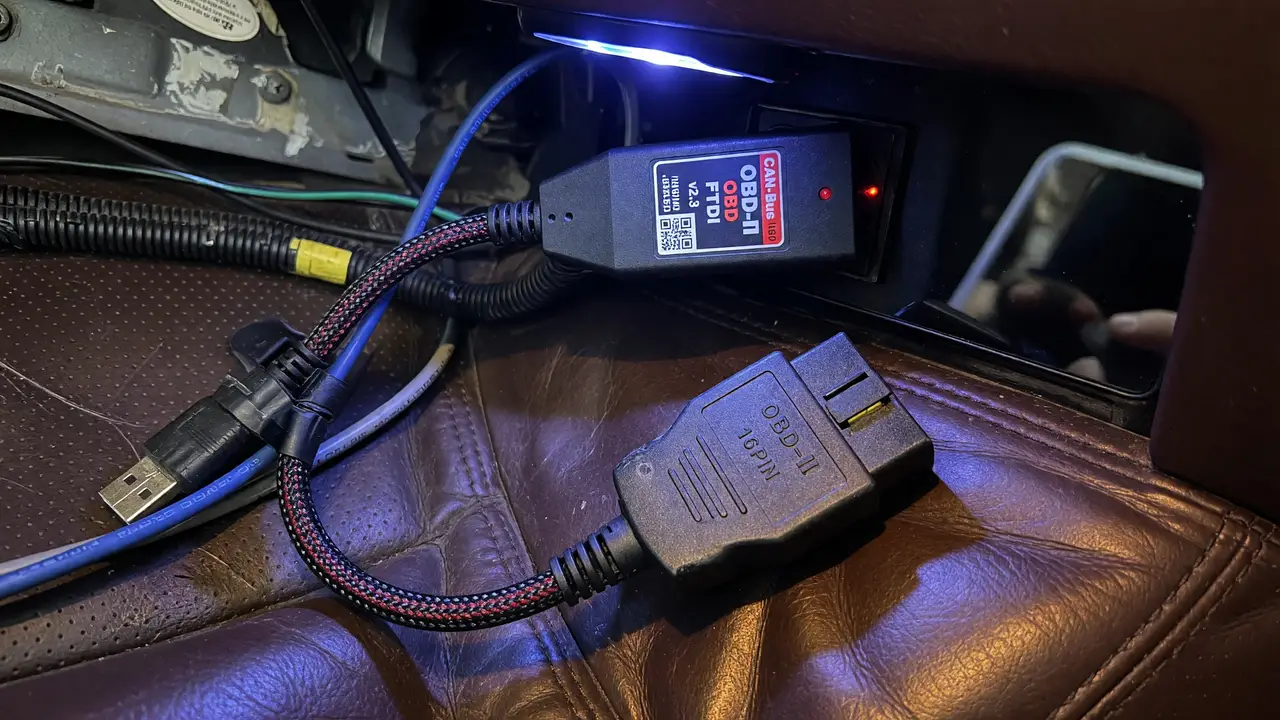
Review: The Best CAN-Bus to USB Adapters for Car Diagnostics
Compare top CAN-Bus to USB adapters like OBDLink, Kvaser, PEAK, and STM32 options for car diagnostics, logging, and development work.
Picking a CAN-bus to USB adapter usually comes down to one practical tension: consumer tools built for phone apps versus professional interfaces designed for steady logging and development work.
The difference shows up fast in the field. Dropped frames during high-speed traces, driver headaches after kernel updates, and isolation failures near high-voltage systems all separate the options quickly.
Top Contenders in 2024–2025
Five adapters keep showing up in forum threads, manufacturer specs, and real-world use:
- OBDLink MX+ and its CX variant for consumer diagnostics
- Kvaser Leaf Light HS v2 when you need stable timestamps
- PEAK-System PCAN-USB (isolated version preferred) for industrial or EV environments
- Vgate vLinker FS and GridConnect CAN USB as budget picks
- STM32-based USB2CAN adapters running CandleLight firmware for open-source projects
Professional users lean toward Kvaser and PEAK for galvanic isolation and solid SDK support. Hobbyists and mechanics often stick with OBDLink for its app ecosystem and lower price.
Key Specifications Compared
| Adapter | Max Baud Rate | Isolation | Timestamp Accuracy | OS Support | Connector Options |
|---|---|---|---|---|---|
| OBDLink CX/MX+ | 1 Mbps (CAN) | No | Not specified | Android/iOS, Windows (BLE) | OBD-II |
| Kvaser Leaf Light HS v2 | 1 Mbps | Yes | 100 µs | Windows, Linux (SocketCAN) | DSUB-9 or OBD-II |
| PEAK PCAN-USB | 1 Mbps | Optional | Hardware-supported | Windows, Linux | DSUB-9 |
| Vgate vLinker FS | 500 kbps | No | Basic | Windows, Android | OBD-II |
| STM32 USB2CAN | 1 Mbps | No | Software | Linux (CandleLight) | Various |
Kvaser stands out here with 8000 msg/s throughput and standard isolation—advantages that matter once you’re running sustained logs.
Pricing and Where Value Breaks
Street prices reflect the reliability difference:
- OBDLink MX+: $139.95 direct, sometimes near $100 on sale
- Kvaser Leaf Light HS v2: $285–$347 through industrial distributors
- PEAK PCAN-USB: €199 standard, €245 for the isolated version
- Budget units (Vgate, generics): $30–$70 on Amazon
The $150–$200 premium for a Kvaser or isolated PEAK buys documented drivers, long-term firmware support, and fewer packet drops under load. Cheap STM32 adapters work fine for SavvyCAN experiments, but expect to handle firmware flashing yourself and forgo isolation.
Common Pain Points and Workarounds
Three issues come up again and again:
- Driver or BLE pairing failures after Windows 11 or Linux kernel updates
- Message drops on non-isolated hardware during long traces
- Counterfeit risk on third-party marketplaces
Practical steps:
- Check the latest CANlib or PEAK drivers before you buy
- Choose isolated versions when you’re working near EV high-voltage sections
- Flash CandleLight firmware on STM32 boards only after confirming the exact chip variant
Decision Workflow
flowchart TD
    A[Start] --> B{Primary Use?}
    B -->|Phone apps & quick scans| C[OBDLink MX+]
    B -->|Logging & development| D{Need isolation?}
    D -->|Yes| E[Kvaser Leaf or PEAK isolated]
    D -->|No| F[Budget STM32 or Vgate]
    C --> G[Check OBDLink app compatibility]
    E --> H[Confirm SocketCAN or CANlib support]
Practical Takeaways
Match the adapter to the actual workload instead of chasing the lowest price. For occasional OBD-II scans, the OBDLink MX+ remains the clearest consumer pick. For repeatable CAN traces or CAN FD work, spend the money on an isolated Kvaser or PEAK unit.
Test firmware and driver versions on your target OS before locking into a long project. Isolation and timestamp quality matter more than raw baud-rate numbers once traffic climbs past a few thousand messages per second.
The right adapter simply removes friction instead of creating new problems every time you plug in.