
Crackling Speakers in Your BMW Z4? Trace It Before It Spreads
Diagnose and fix crackling speakers in BMW E85/E86 Z4 models. Common causes include amplifier corrosion, water leaks, and speaker failure. Step-by-step guide and repair costs.
Older E85 and E86 Z4s often start crackling once they reach 15–20 years old. The problem almost never stays with a single speaker. Water leaks, age, and electrical gremlins usually pull in multiple channels. A systematic check keeps you from buying parts that miss the real issue. Factory Audio Systems at a Glance BMW offered three Philips built systems on the 2003–2008 Z4. Impedance, power handling, and cone materials vary by level, so replacement choices matter. | System | Speakers | Key Specs | Impedance | Notes...

How Generative Tools are Replacing Traditional CAD
Exploring the shift from manual sketching to AI-driven topology optimization and 'Direct-to-Quad' modeling in 2026.
For decades, Computer Aided Design (CAD) meant sitting in front of a screen and manually defining every fillet, chamfer, and extrusion. In 2026, the workflow has flipped. We are no longer 'drawing' parts; we are 'describing' requirements to AI agents that handle the heavy lifting of geometry creation. Generative design tools have moved beyond specialized aerospace applications and into the hands of every DIY engineer. By defining the load points and the 'keep out' zones, the AI generates organic, lattice heavy...
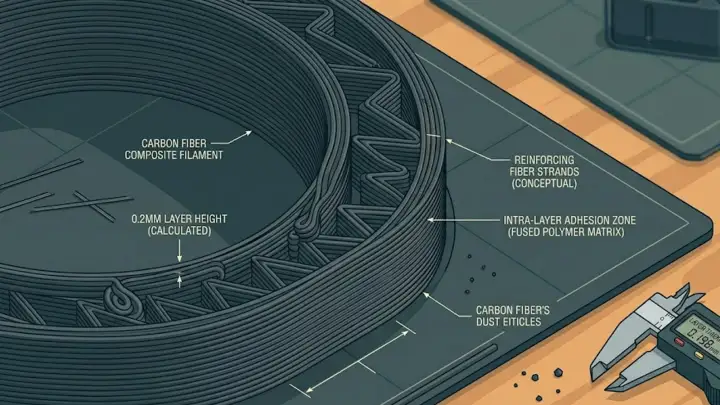
Industrial Strength at Home: The Top 5 Engineering Materials
Moving beyond PLA: How to master Carbon Fiber, Nylon, and Polycarbonate in a home lab.
In 2026, the 'Maker' has evolved into the 'Engineer.' We are no longer satisfied with brittle PLA trinkets that melt in a hot car. The modern workshop is defined by its ability to process industrial grade polymers that can withstand real world stress, heat, and chemical exposure. Printing these materials used to require a $50,000 Stratasys machine. Today, with the right enclosure and hotend, you can achieve the same results on a desktop. Here are the five materials that have changed the game for home engineering...
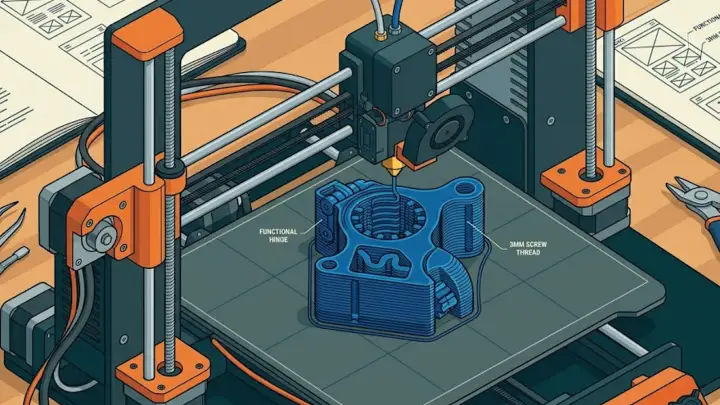
My favorite 3D-printing settings for functional parts
The baseline slicer settings I use when a printed part needs to be tested, handled, and revised quickly.
Functional prints are about repeatability before finish. When I’m prototyping a mechanical assembly, I’m not looking for a gallery piece. I’m looking for an answer. I need to know if the snap fit holds, if the heat set insert stays put, and if the motor mount can handle the torque without delaminating. The biggest mistake I see—and one I’ve made plenty of times—is chasing "pretty" layers on a part that hasn't even proven its geometry works. If a part takes 14 hours to print because you wanted 0.1mm layers, but it...
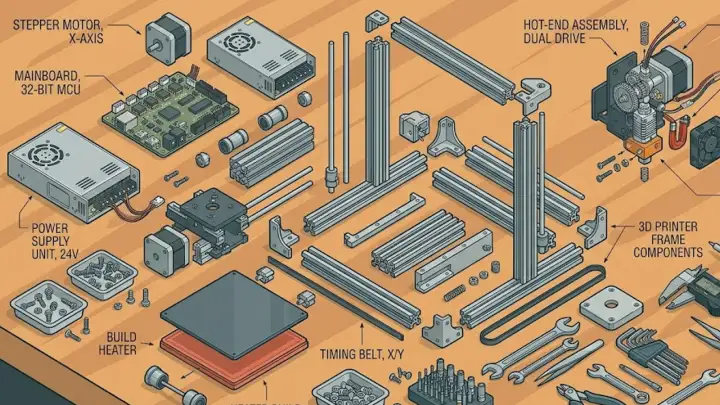
The Hidden Cost of 'Cheap' Printers
Why a $200 'budget' printer often ends up costing more than a $1,000 flagship in the long run.
The allure of the $199 3D printer is powerful. For a beginner, it seems like a low risk entry point into the world of engineering and tinkering. But in 2026, the 'budget' printer market has become a trap of hidden costs, lost time, and failed projects. If you are looking at your first purchase, or upgrading a farm, you need to look past the sticker price. The true cost of a 3D printer is measured over its first 1,000 hours of operation, not the day it arrives. The 'Upgrade' Tax Budget printers are often sold as...
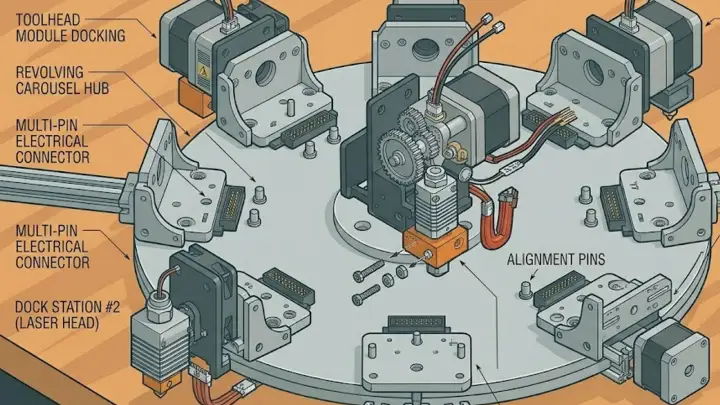
Why 2026 is the Year of the Toolchanger
High-speed printing was just the beginning. The real revolution is the death of filament waste and the rise of multi-toolhead engineering.
Speed is no longer the metric that defines a 'pro' 3D printer. In 2026, we have hit the physical limits of how fast a nozzle can move before the laws of thermodynamics (and plastic cooling) push back. The real bottleneck isn't how fast you can print one color; it is how much time and plastic you waste when you need two. For years, we have tolerated 'poop towers' and massive purge piles from single nozzle AMS systems. But this year, the industry has pivoted. The Toolchanger —a system that swaps entire physical...