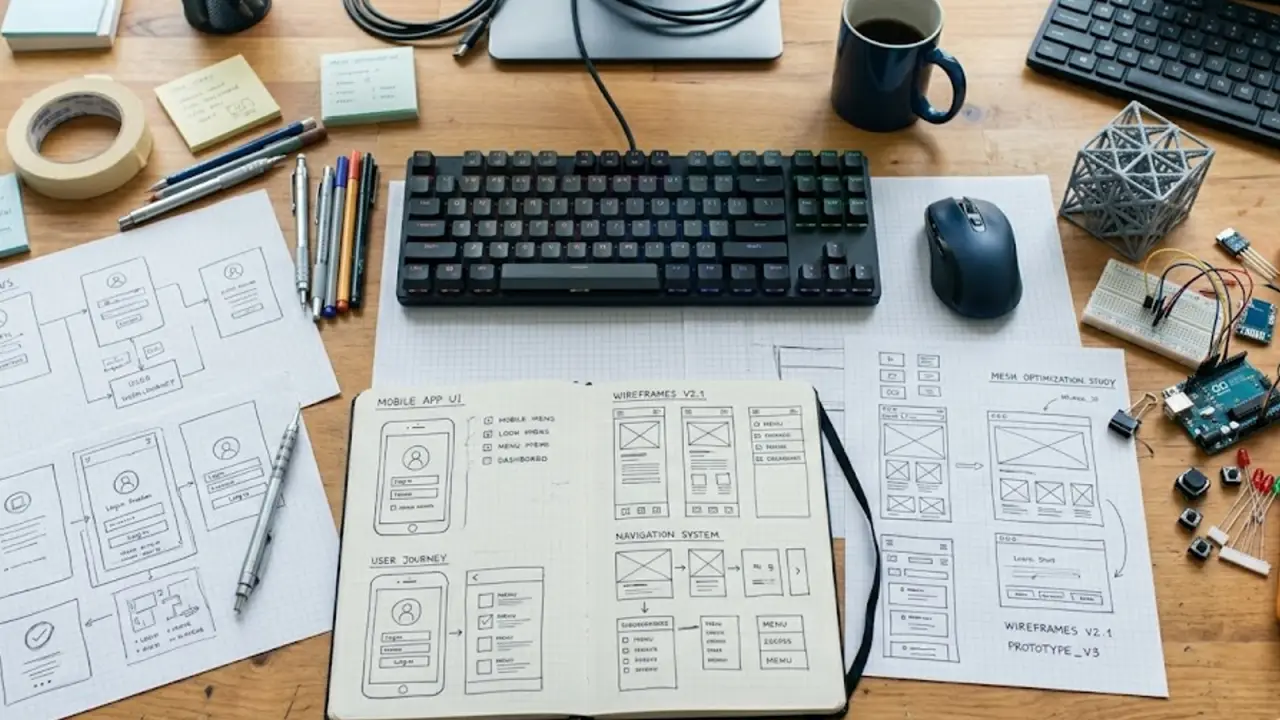
Best libraries for fast UI prototyping
A lean React stack for testing interface ideas before the product spec hardens.
Fast UI prototypes need fewer decisions, not more components.
The trap I’ve fallen into more times than I’d like to admit is spending three days configuring a design system for a product that hasn’t even proven it should exist. You start by picking a color palette, and suddenly you’re knee-deep in a complex theme provider before you’ve even built a functional login button.
Lately, I’ve moved toward a “disposable” philosophy. The goal is to get the first interaction on screen quickly enough that the weak parts of the concept become obvious. If the idea is bad, I want to know within hours, not weeks.
The Lean Stack
My default stack is intentionally boring. I want tools that stay out of the way so I can focus on the feel of the interaction:
- Radix UI Primitives: I don’t want to think about accessibility or the logic of how a dropdown closes when you click outside of it. Radix gives me the “skeleton” of a component without the opinionated styling that usually gets in the way of a custom prototype.
- Tailwind CSS: It’s the fastest way to “sketch” in code. I can change the entire layout of a view in thirty seconds without jumping back and forth between files.
- TanStack Query (React Query): Data fetching is usually the messiest part of a prototype. This handles the caching and loading states so I can treat the server like a simple variable.
- Lucide React: A massive icon set that looks clean and stays consistent. Icons are a cheap way to make a wireframe feel like a real product.
The “Delete-First” Mentality
I’ve developed a simple rule: pick tools that are boring to wire, easy to delete, and clear enough that the prototype could become production code if the test succeeds.
The best prototypes I’ve built were the ones where I resisted the urge to be clever. I stopped trying to build the “perfect” architecture and started building the shortest path to a click. When you use unstyled primitives, you aren’t fighting a framework’s aesthetics; you’re just testing the utility.
When the Idea Needs Numbers
If the prototype involves data density, I stick to one charting library—usually Recharts or Nivo. The moment you add a second one, you’re back in “decision fatigue” territory.
The point of prototyping isn’t to show off your ability to use complex libraries. It’s to prove—or disprove—a hypothesis about how a human will interact with your software. If you can’t get to that “aha” moment in a couple of sessions, your stack is likely too heavy. Keep it lean, keep it ugly if you have to, but keep it moving.