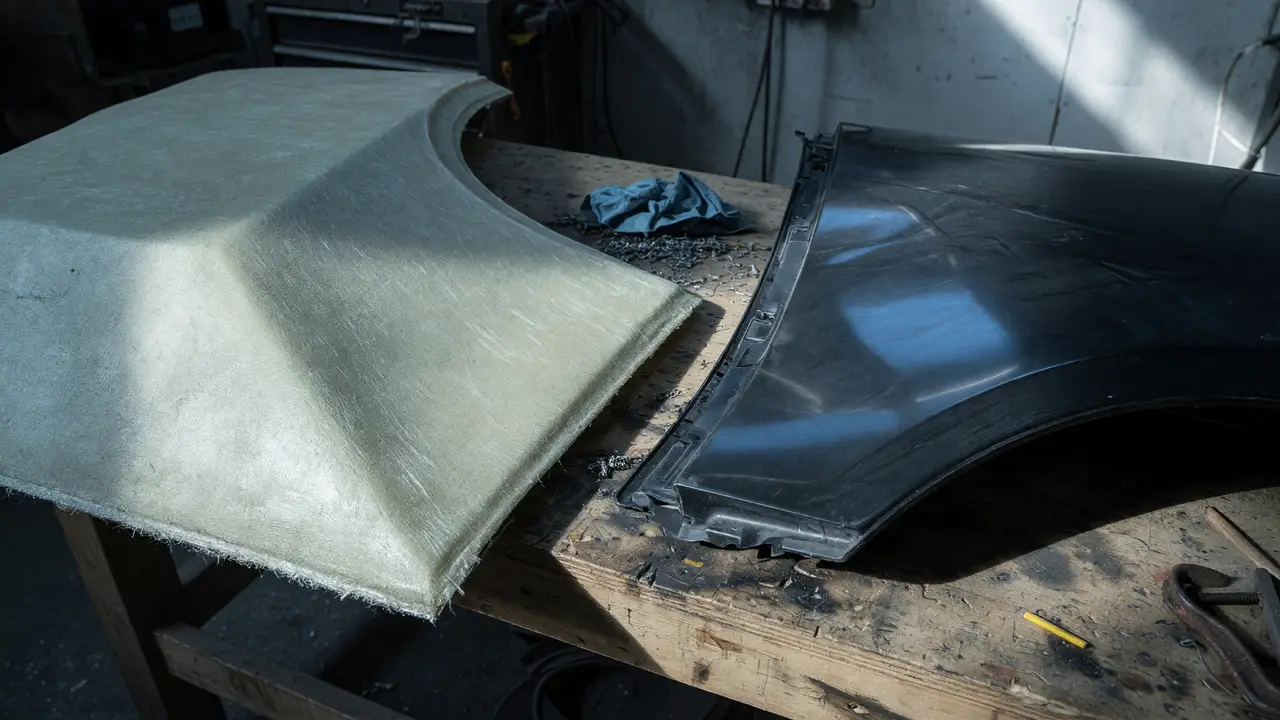
Sourcing Automotive Components: Fiberglass vs ABS Plastic for Aftermarket Parts
Compare fiberglass and ABS for aftermarket automotive parts: pricing, material properties, durability, sourcing lead times, and decision framework for builders.
Aftermarket body panels come with a straightforward trade-off. Builders chasing lower weight and higher stiffness lean toward fiberglass. Those who need parts that survive daily driving usually prefer ABS. Neither material wins outright.
Price and Availability
Fiberglass dominates the aftermarket hood market for cars like the Ford Mustang. Current listings for 2024–2025 models run from $360 to $1,100 depending on year and brand.
| Material | Typical Price Range (Mustang Hoods) | Common Suppliers | Notes |
|---|---|---|---|
| Fiberglass | $500–$1,100 | Anderson Composites, VIS Racing, Amerihood | Race-weight pin-on options widely available |
| Carbon Fiber | $1,160–$2,599 | Anderson Composites, Seibon, DarwinPRO | Direct performance alternative |
| ABS Plastic | Rare in performance catalogs | Limited to trim pieces | Almost no aftermarket hoods listed |
True ABS hoods barely appear in performance catalogs. Search the major retailers and you mostly find steel OEM replacements or fiberglass parts. That scarcity pushes most builders toward fiberglass when they need a functional hood upgrade.
Material Properties
Fiberglass offers higher stiffness and better heat resistance. ABS brings lower density and more give on impact.
Fiberglass (SMC/FRP)
- Tensile strength: 55–80 MPa
- Flexural modulus: 8–12 GPa
- Density: 1.7–2.0 g/cm³
- Continuous service temperature: up to 180 °C (vinyl-ester grades)
ABS (standard vs. 20 % glass-filled)
- Tensile strength: 40–65 MPa
- Flexural modulus: 2.0–7.5 GPa
- Density: 1.04–1.22 g/cm³
- Continuous service temperature: ~80 °C
Fiberglass wins on rigidity and thermal stability around engine bays. ABS wins on weight and the ability to flex instead of crack on small hits.
Supplier Lead Times
Most performance suppliers focus on fiberglass or carbon fiber. VIS Racing lists 3–10 business days for stock items, but custom orders stretch to 12–18 weeks. Duraflex ships many fiberglass parts in 3–5 days. Seibon carbon fiber orders often take 2–4 weeks even when listed as in stock.
Pure ABS body panels almost never show up in these catalogs. Builders who want ABS usually turn to OEM-style trim suppliers or settle for hybrid resins that still behave more like fiberglass than injection-molded plastic.
Durability and Fitment
Owner reports on Mustang, Subaru, and BMW forums show consistent patterns. Fiberglass bumpers and hoods crack from curb strikes and develop spider cracks from repeated heat cycles. Fitment often eats hours of trimming and shimming because post-cure shrinkage leaves gaps.
ABS panels handle light impacts better and resist shattering, though cheaper grades can turn brittle in extreme cold. Paint adhesion problems appear more often with ABS, but those remain easier to fix than structural repairs on fiberglass.
“Fiberglass suits show or track cars driven carefully. ABS or urethane remains the practical choice for street-driven vehicles.”
Weight Savings
Real-world swaps on compact and pony cars show 5–10 lb savings per fender when steel gives way to fiberglass. Hood savings run higher but still trail carbon fiber. Those numbers matter most in dedicated track cars where every pound affects suspension response and braking.
Decision Framework
flowchart TD
    A[Daily driver or occasional track?] -->|Daily| B[Choose ABS for impact resistance]
    A -->|Track/show| C[Choose fiberglass for stiffness]
    B --> D[Verify heat exposure near engine bay]
    C --> E[Budget for fitment time and repair skills]
Practical Takeaways
- Budget $500–$1,100 for a fiberglass hood and plan on modification time.
- Expect limited or no true ABS options for structural performance parts.
- Match material to use case: fiberglass for stiffness-critical applications, ABS where impact tolerance matters more.
- Always check maximum service temperature against your engine bay environment.
The right choice comes down to whether your build values outright stiffness or long-term street resilience.