Industrial Strength at Home: The Top 5 Engineering Materials
Moving beyond PLA: How to master Carbon Fiber, Nylon, and Polycarbonate in a home lab.
In 2026, the ‘Maker’ has evolved into the ‘Engineer.’ We are no longer satisfied with brittle PLA trinkets that melt in a hot car. The modern workshop is defined by its ability to process industrial-grade polymers that can withstand real-world stress, heat, and chemical exposure.
Printing these materials used to require a $50,000 Stratasys machine. Today, with the right enclosure and hotend, you can achieve the same results on a desktop. Here are the five materials that have changed the game for home engineering this year.
1. PA6-CF (Carbon Fiber Reinforced Nylon)
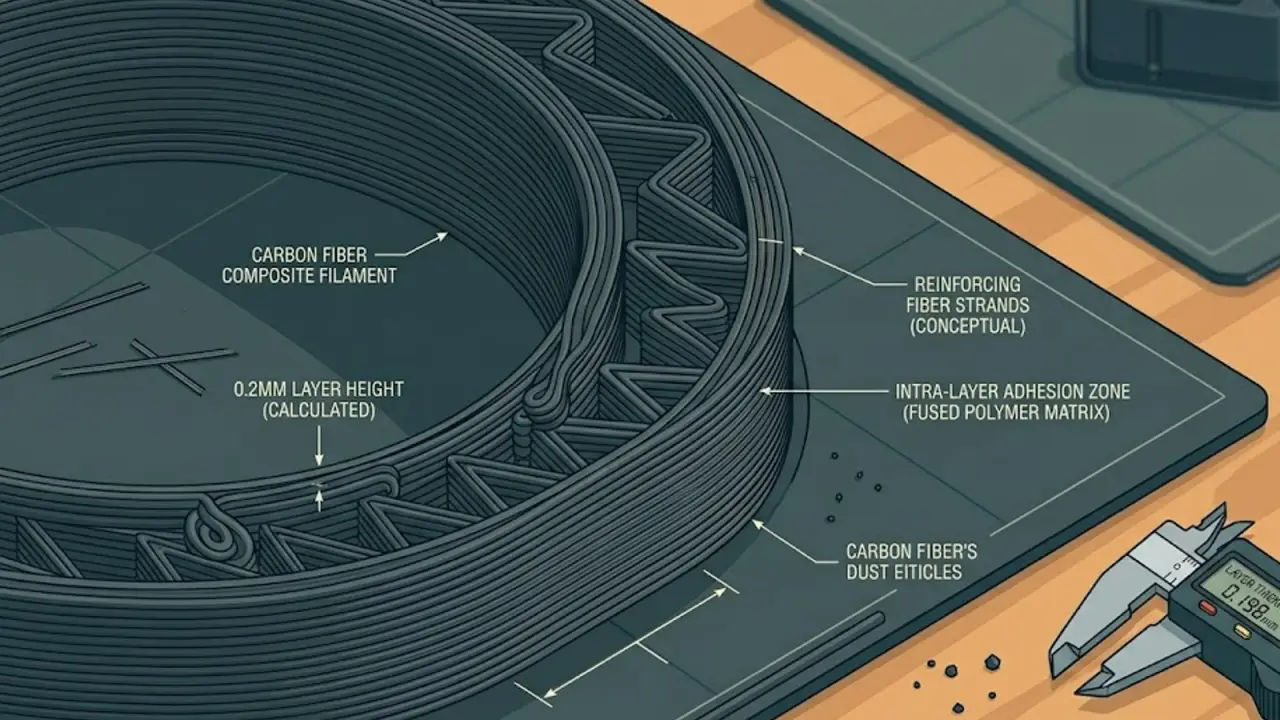
This is the current king of functional DIY. PA6-CF offers incredible stiffness and heat resistance. It is the go-to for drone frames, automotive parts, and high-load brackets. The carbon fiber strands not only add strength but also help prevent the warping that usually plagues standard Nylon.
2. ASA (Acrylonitrile Styrene Acrylate)
Think of ASA as ABS’s sophisticated cousin. It has the same mechanical strength but is UV-resistant and much easier to print in an enclosed chamber. If you are building anything that will live outdoors—like a weather station or a solar mount—ASA is your only real choice in 2026.
3. PC (Polycarbonate)
When you need impact resistance and clarity, Polycarbonate is unmatched. It is notoriously difficult to print because it requires high bed temperatures (110C+), but for parts that need to be ‘bulletproof’ or withstand extreme temperatures, it is the industrial standard.
4. TPU 95A (Thermoplastic Polyurethane)
Flexible parts have moved beyond ‘squishy’ toys. In engineering, TPU is used for vibration dampeners, gaskets, and protective bumpers. In 2026, direct-drive extruders have become so precise that we can now print TPU at speeds previously reserved for rigid plastics.
5. Co-Polyesters (PET-CF)
For those who need chemical resistance and high dimensional stability, PET-CF (Carbon Fiber PET) has become a workshop staple. It does not absorb moisture as aggressively as Nylon, making it more reliable for long-term storage and use in humid environments.
The Hardware Requirement
You cannot print these materials on a stock, open-frame printer. To achieve industrial strength, your setup must include a hardened steel nozzle, an all-metal hotend capable of 300C, and a sealed enclosure to maintain ambient heat. The investment in these components is what separates a hobbyist from a professional-grade workshop.