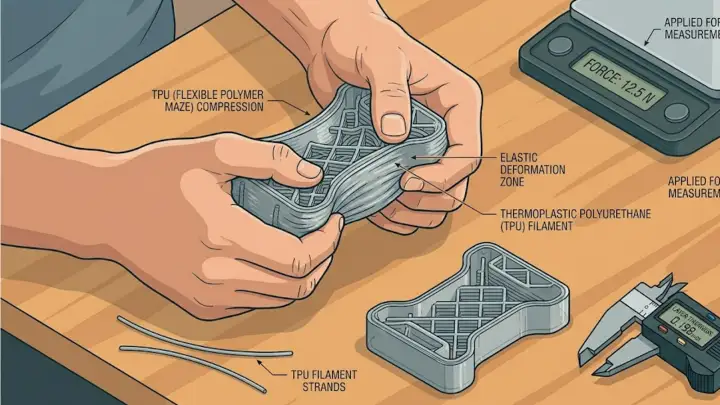
Mastering TPU: The Definitive Guide to Printing Flexible Parts
How to eliminate jams and achieve industrial-grade results with flexible filaments in your home workshop.
Flexible filaments like TPU (Thermoplastic Polyurethane) are the most underutilized tools in the DIY engineer's arsenal. While everyone is focused on rigid frames, the real 'pro' builds in 2026 utilize TPU for gaskets, vibration isolators, and impact resistant bumpers. However, TPU is notoriously difficult to print if your setup isn't tuned for its unique physical properties. It is often described as 'trying to push a wet noodle through a straw.' Here is how to master it without the constant jams and stringing....
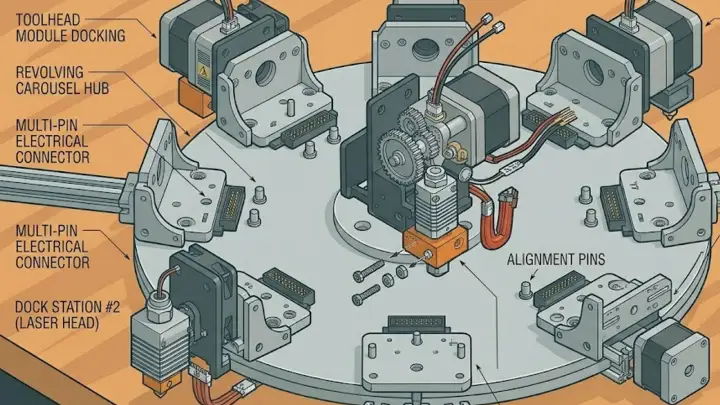
Why 2026 is the Year of the Toolchanger
High-speed printing was just the beginning. The real revolution is the death of filament waste and the rise of multi-toolhead engineering.
Speed is no longer the metric that defines a 'pro' 3D printer. In 2026, we have hit the physical limits of how fast a nozzle can move before the laws of thermodynamics (and plastic cooling) push back. The real bottleneck isn't how fast you can print one color; it is how much time and plastic you waste when you need two. For years, we have tolerated 'poop towers' and massive purge piles from single nozzle AMS systems. But this year, the industry has pivoted. The Toolchanger —a system that swaps entire physical...